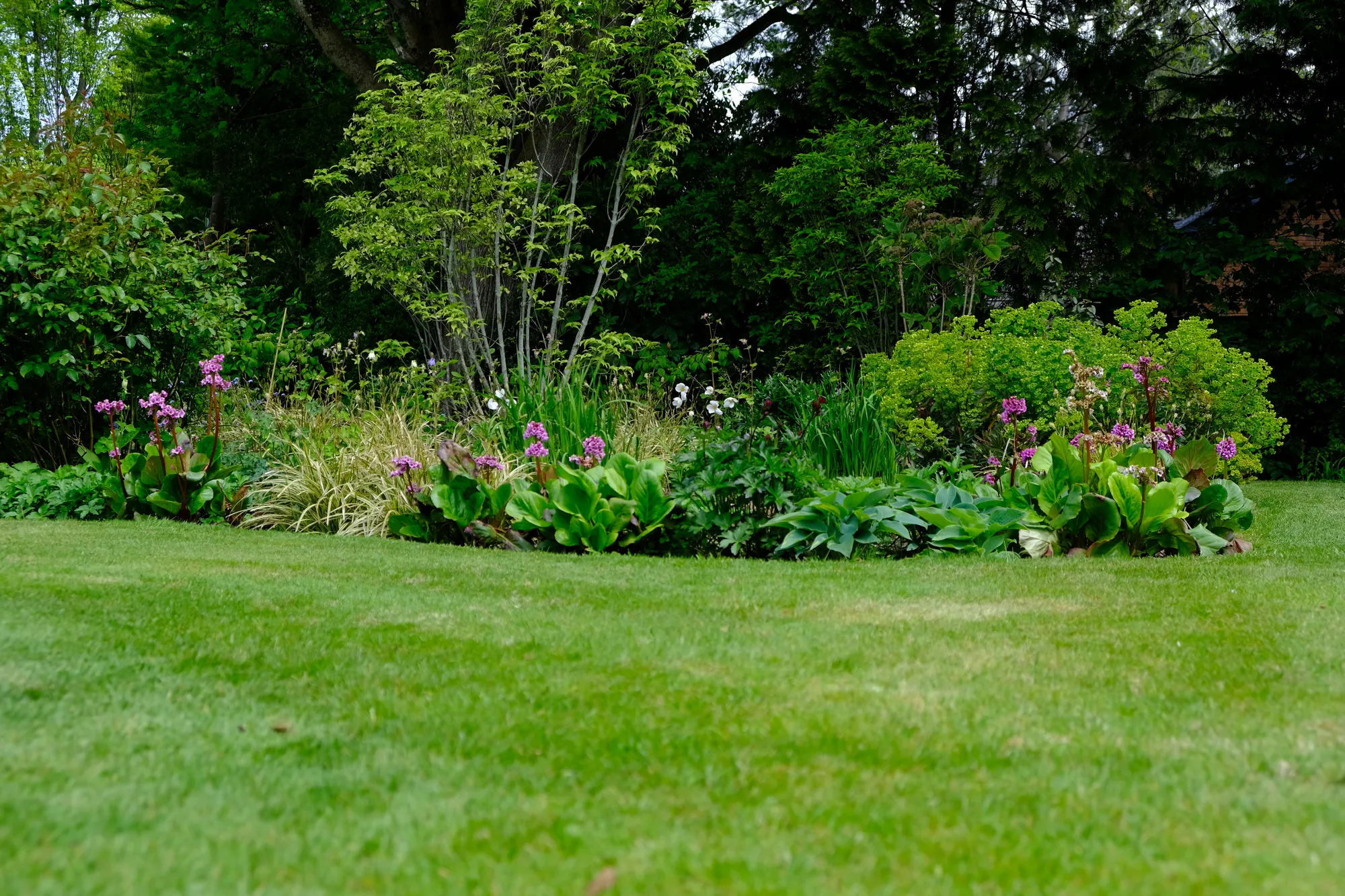
A thin, mossy lawn in October is almost always the product of three things: thatch on the surface, compaction below it, and grass that has simply run out of steam. Autumn renovation deals with all three. Done in the right order, it works remarkably well. Done in the wrong order, it wastes seed and money.
1. Deal with the moss first
If moss is a big part of the problem, treat it about two weeks before you scarify. The moss turns black and dies, and the scarifier then pulls out dead material. Scarifying live moss just spreads the spores over the whole lawn.
2. Scarify
Scarifying rakes out the thatch, the layer of dead grass and debris that sits on the soil and stops water, air and feed getting down to the roots. A powered scarifier does in an hour what would take a weekend by hand. Two passes at different angles get most of it out. You'll be shocked how much comes out of an ordinary lawn.
3. Aerate
Compaction is the hidden problem in most family lawns. Hollow-tine aeration pulls out small cores of soil, which lets air in, lets water drain and gives roots room to grow. On heavy clay, or where water lies after rain, it makes the biggest difference of any job on this list.
4. Overseed
With the thatch out and the holes open, seed has perfect contact with the soil. Choose the mix to suit the lawn: a hard-wearing ryegrass mix for a lawn that gets football and dogs, finer fescues and bents for a lawn that's more for looking at, and a shade mix under trees.
5. Top dress
A sandy top dressing brushed into the aeration holes and over the seed improves the soil over time, covers the seed and helps it germinate evenly.
6. Feed for autumn
An autumn feed is lower in nitrogen and higher in potassium than a spring one. It builds roots and toughens the grass for winter rather than pushing soft, lush growth that the first frosts will damage. Never use a spring feed in autumn.
It will look terrible for about three weeks. That's normal.
A properly scarified lawn looks as though something has gone very wrong. Keep heavy feet off it, keep it watered if the weather turns dry, and within three or four weeks the new grass is up and the lawn is thicker and greener than it was before.
Timing in North Wales
The window runs from late August to around mid-October. The soil is still warm, the rain has returned and weeds are slowing down. Leave it later and germination becomes slow and patchy. If you miss it this year, a spring renovation in April is the next best option.

Written by Mark, The Garden Curator. RHS Level 3 qualified gardener working across Flintshire and Denbighshire.