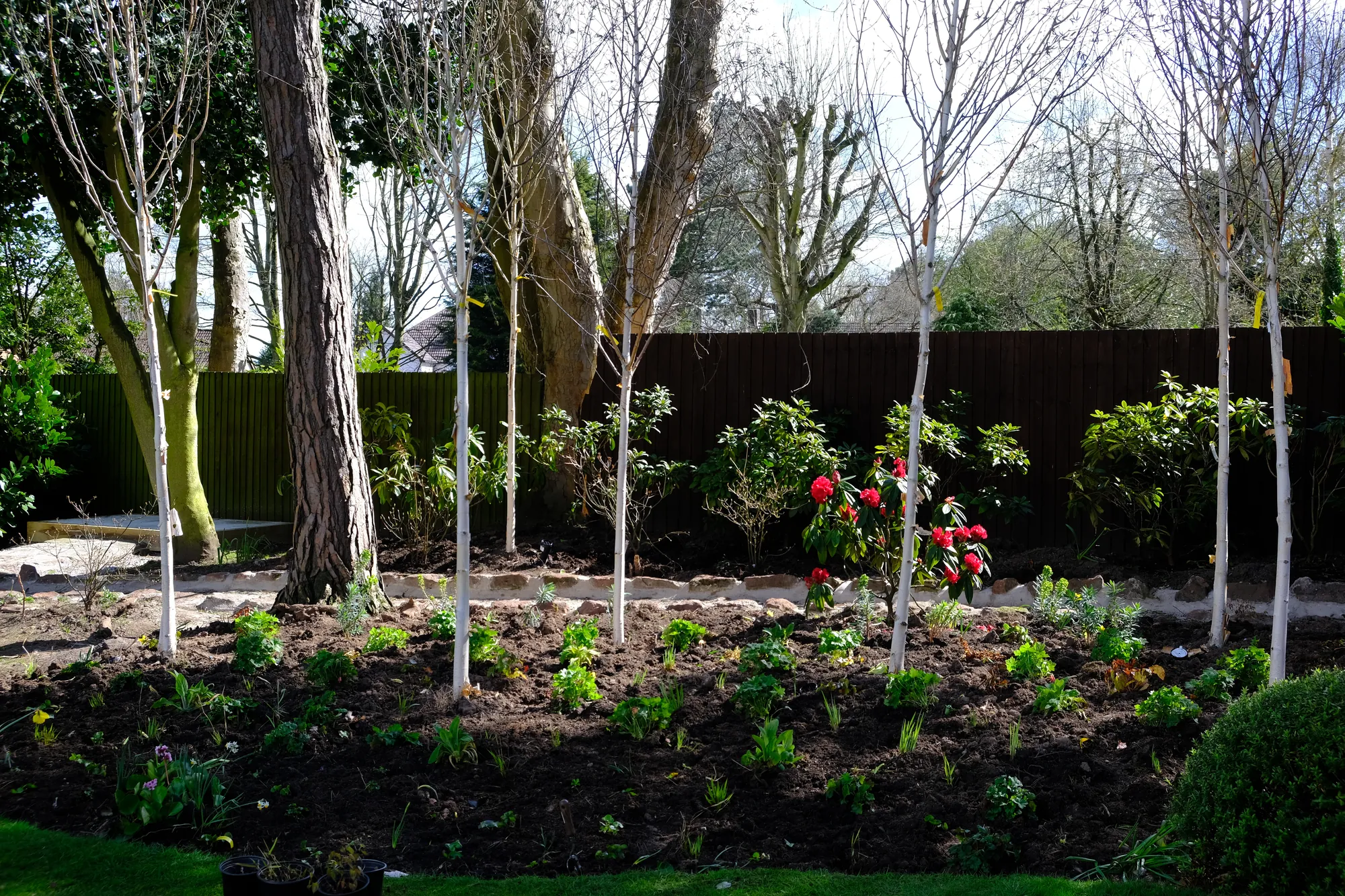
From November to March, many trees, shrubs, roses and hedging plants are sold bare-root: lifted from the field while they're dormant and sold without a pot or compost. They're cheaper, there's more choice, and planted well they often establish faster than pot-grown plants.
Why bare-root is worth waiting for
- Price. Hedging whips can cost a fraction of the price of potted plants, which makes a long native hedge affordable.
- Establishment. Planted while dormant, the roots settle in over winter and the plant is ready to grow away in spring.
- Choice. Specialist nurseries offer far more varieties of roses and fruit trees bare-root than they ever do in pots.
- Less plastic. No pots, no compost, much less waste.
What to plant bare-root
Native hedging (hawthorn, blackthorn, hazel, field maple, dog rose, guelder rose), formal hedging (beech, hornbeam, and yew as root-balled plants), roses, fruit trees and soft fruit, and many ornamental trees.
Planting them properly
- Plant as soon as they arrive. If you can't, heel them into a trench of soil and keep the roots damp.
- Soak the roots in a bucket of water for an hour or two before planting.
- Never plant into frozen or waterlogged ground.
- Dig a hole wider than the roots, but no deeper. Plant at the same depth the plant grew in the field. You can usually see the soil mark on the stem.
- Spread the roots out, backfill, and firm the soil gently with your heel.
- Water in well, even in winter, and mulch.
- Stake trees low, about a third of the way up the trunk, so the stem can move and strengthen.
Planting a hedge
For a dense native hedge, plant in a double staggered row, about five or six plants per metre. Cut the whips back by about a third after planting to encourage bushy growth from the base. Keep the base weed-free for the first couple of years and water through dry spells in spring. Within three or four years you'll have a hedge full of flowers, berries and birds.
Written by Mark, The Garden Curator. RHS Level 3 qualified gardener working across Flintshire and Denbighshire.