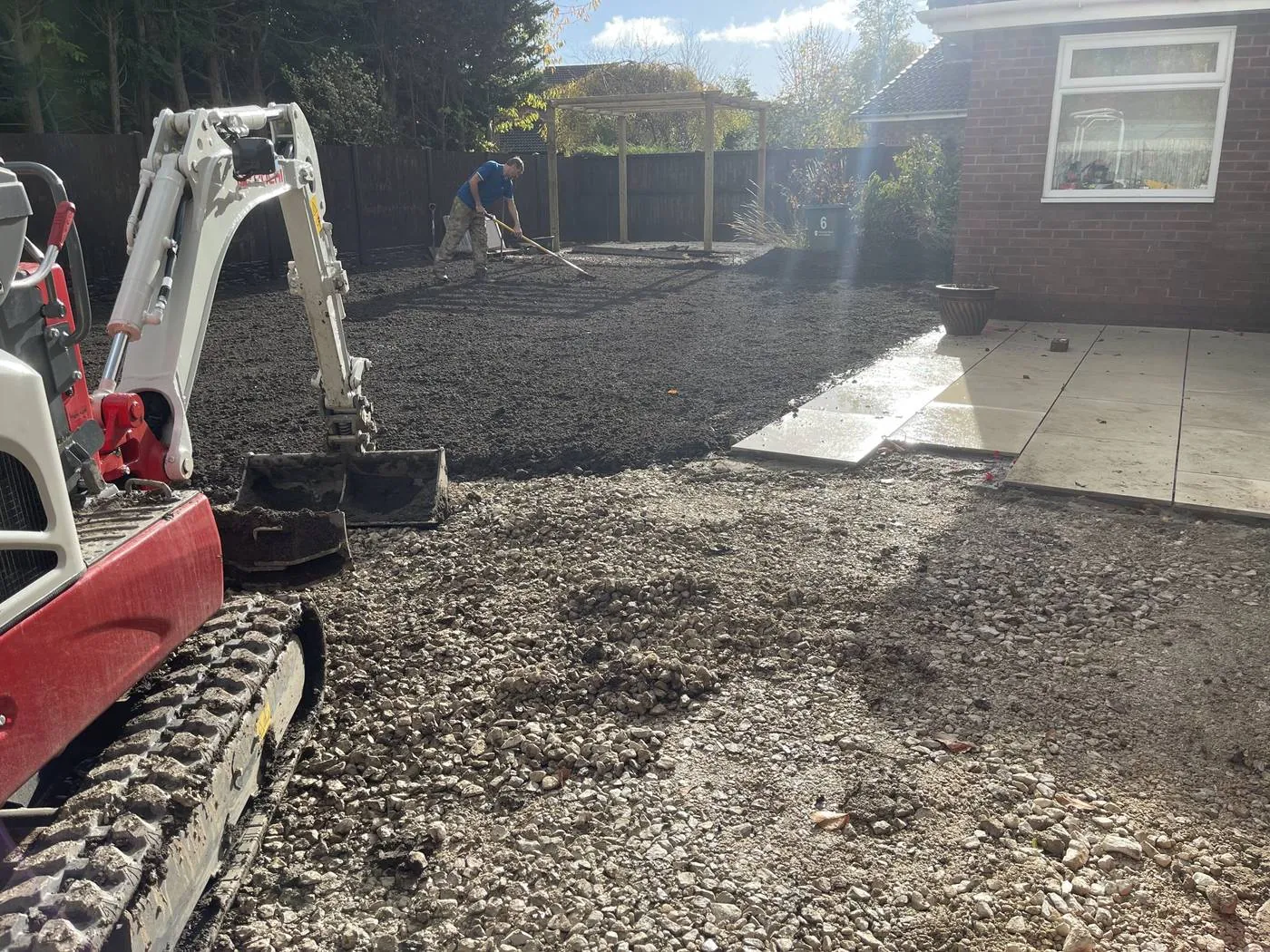
A new patio looks much the same on the day it's finished, however it was built. The difference shows a winter or two later, when slabs start to rock, puddles sit in the same places after every shower, and the joints crack and sprout weeds. Almost every one of those problems starts below the surface.
1. Soft ground left in place
Topsoil is full of organic matter, which slowly rots down and settles. Build a patio on it and the patio settles too. The topsoil and any soft ground have to come out until there's firm subsoil to build on, which in a lot of North Wales gardens means digging deeper than people expect.
2. Too little sub-base, or none at all
The sub-base is the layer of crushed stone that spreads the load and keeps the surface flat. It needs to be laid in layers and compacted with a plate compactor, and it needs to be deeper where the ground is soft or where the patio will take more weight. Skimping here is the most common reason a patio fails.
3. Slabs laid on dabs of mortar
“Dot and dab”, five blobs of mortar under each slab, is quick. It also leaves hollows underneath, so slabs can rock, crack under load, or let water sit beneath them and lift in a frost. A full bed of mortar under every slab supports it right across.
4. No fall
A patio that's perfectly level holds water. Laid to a gentle fall away from the house, rain runs off to the lawn, a border or a drain instead of lying on the surface or running back towards the walls.
5. Too high against the house
The finished surface should sit at least 150mm below the damp-proof course. Raise the ground above it and rain splashes up the wall and can bridge the damp course, which is how a new patio ends up causing damp inside.
6. Porcelain laid like sandstone
Porcelain is dense and has almost no suction, so ordinary mortar doesn't grip it. Each slab needs a bonding primer brushed onto the back before it goes down. Without it, porcelain slabs can come loose even when everything underneath was done properly.
Front gardens are different
In Wales, planning permission isn't usually needed for a patio or driveway, but a new or replacement hard surface in a front garden needs to be permeable or to drain onto a permeable area such as a lawn or border. Up to 5 square metres of existing surfacing can be repaired or replaced without this. The Welsh Government's guidance covers the exceptions, including listed buildings and large changes in level.
The part of a patio you'll never see is the part that decides how long it lasts.
When you're comparing quotes, ask how deep the sub-base will be, whether slabs go on a full mortar bed, and where the water will go. The answers tell you more than the price does.

Written by Mark, The Garden Curator. RHS Level 3 qualified gardener working in Mold and the villages around it.