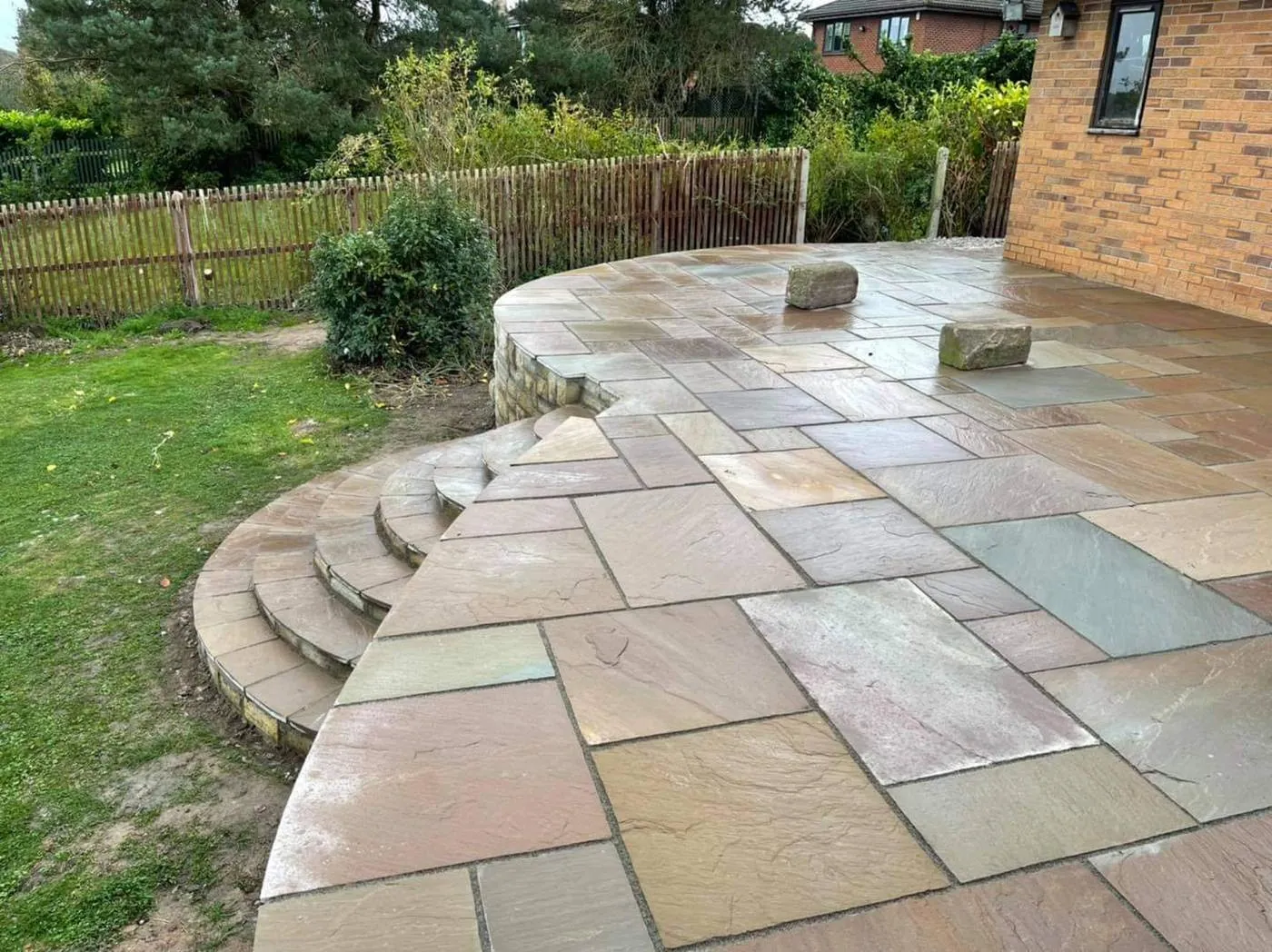
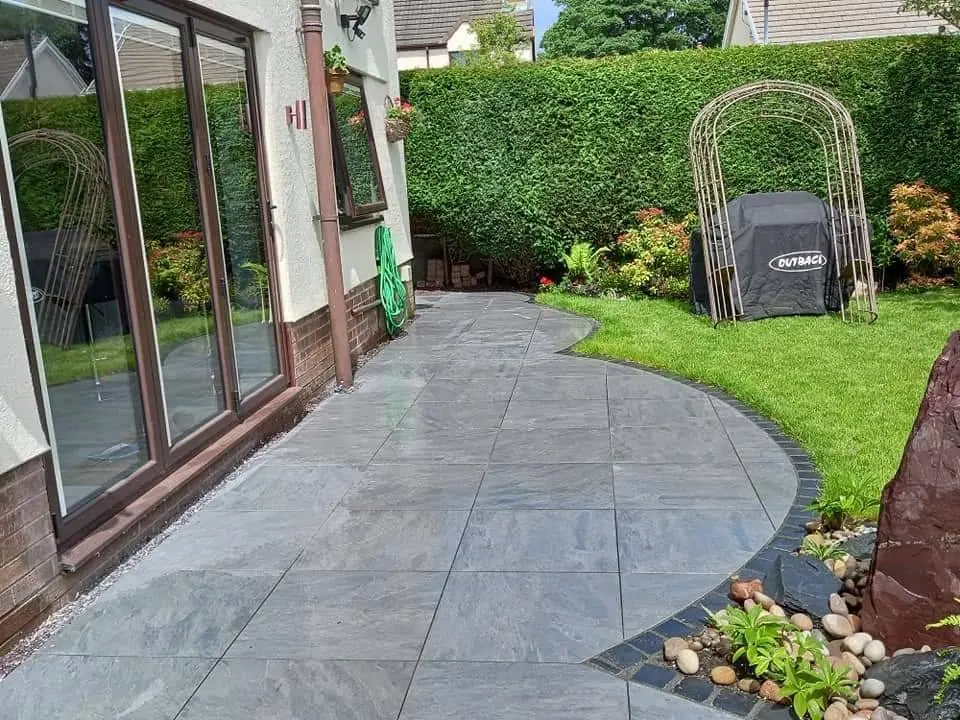
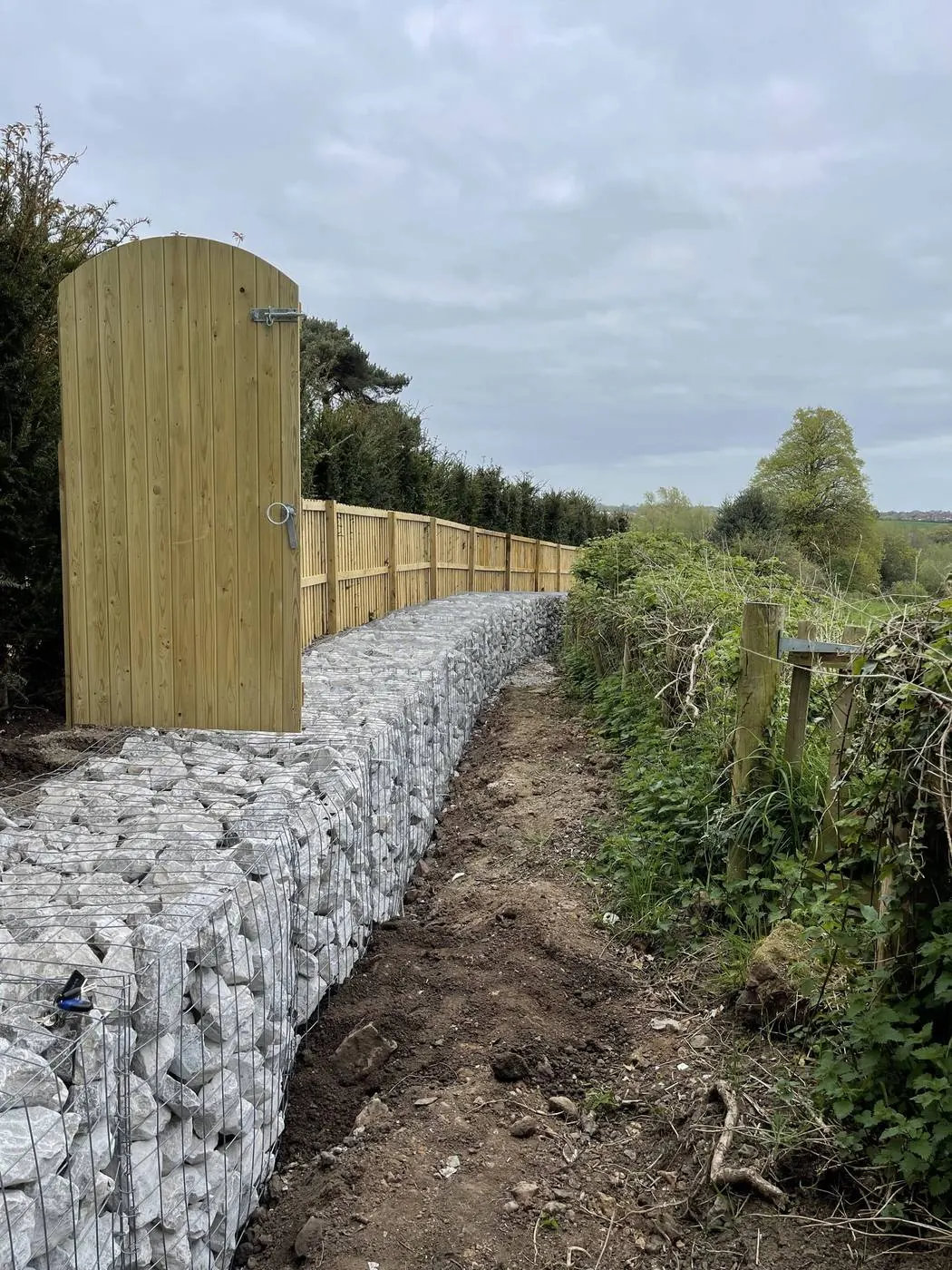
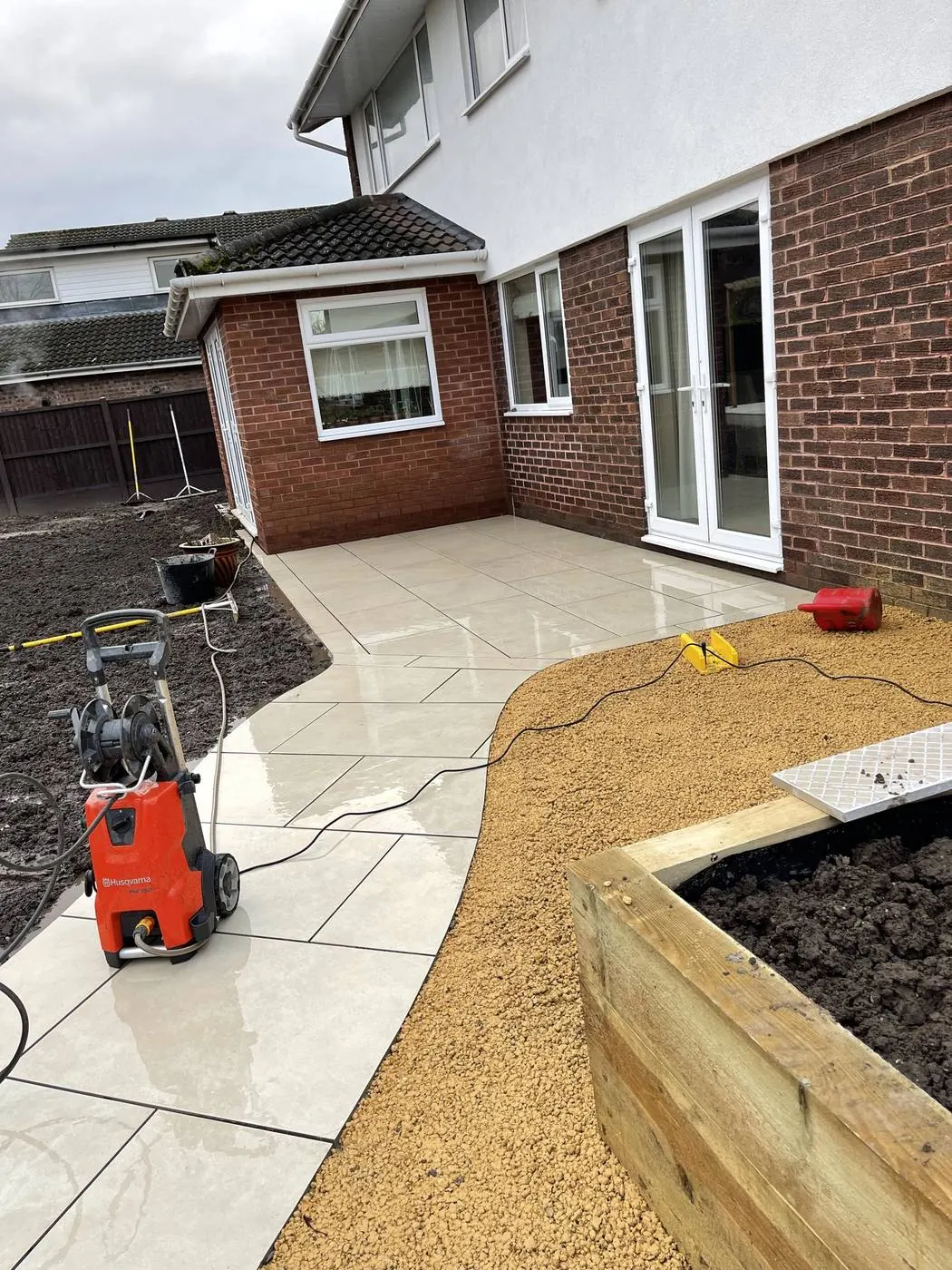
My own work. Every photograph on this page is from a landscaping project I've led, from the bare ground to the finished garden.
What I build
- Patios and terraces in natural sandstone or porcelain, including curved edges and wrap-around steps.
- Paths and edging that join the house, the terrace and the lawn together.
- Steps, retaining walls and raised beds in brick, stone, timber sleepers or gabions, for sloping or split-level gardens.
- New lawns from turf or seed, on ground that has been levelled and prepared properly.
- The planting that finishes it, because a terrace with nothing growing around it is only half a garden.
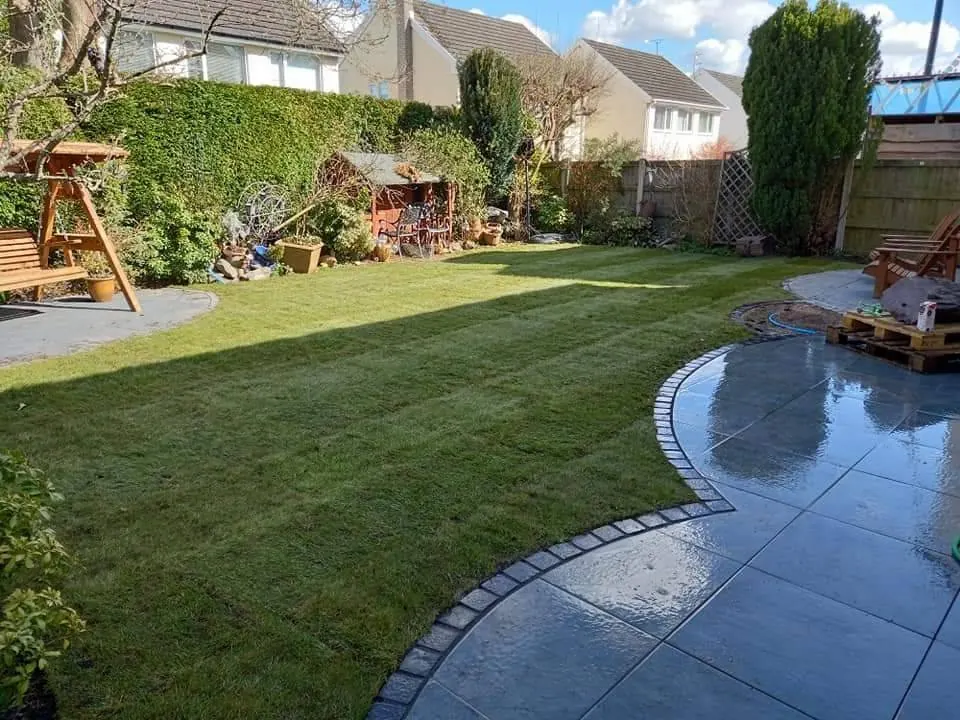
It's what's underneath that counts
A patio is only as good as what it's sitting on. Most of the sunken slabs, rocking flags and puddles I'm asked to put right come down to the same few shortcuts. This is how the work is done instead:
- Dug to the right depth. Topsoil and soft ground come out until there's firm ground to build on.
- A compacted sub-base. Crushed stone is laid in layers and compacted with a plate compactor, deeper wherever the ground is soft or the area takes heavier use.
- A full mortar bed. Every slab is bedded on a full bed of mortar, not five dabs, so there are no hollows to crack or rock.
- A fall for the water. The surface is laid to a gentle fall away from the house, so rain runs off rather than lying.
- Kept below the damp course. The finished level sits at least 150mm below the damp-proof course of the house.
- Porcelain primed. Porcelain slabs have almost no suction, so each one gets a bonding primer on the back before it's laid.
One garden, start to finish
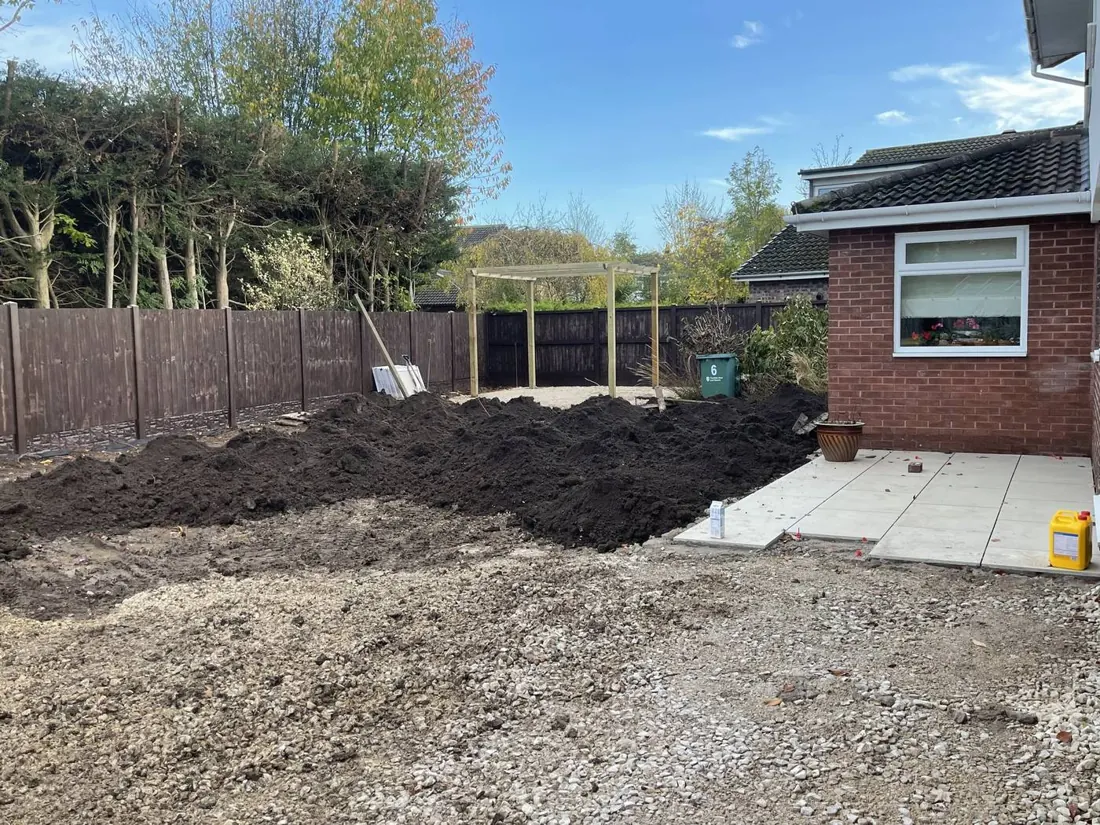
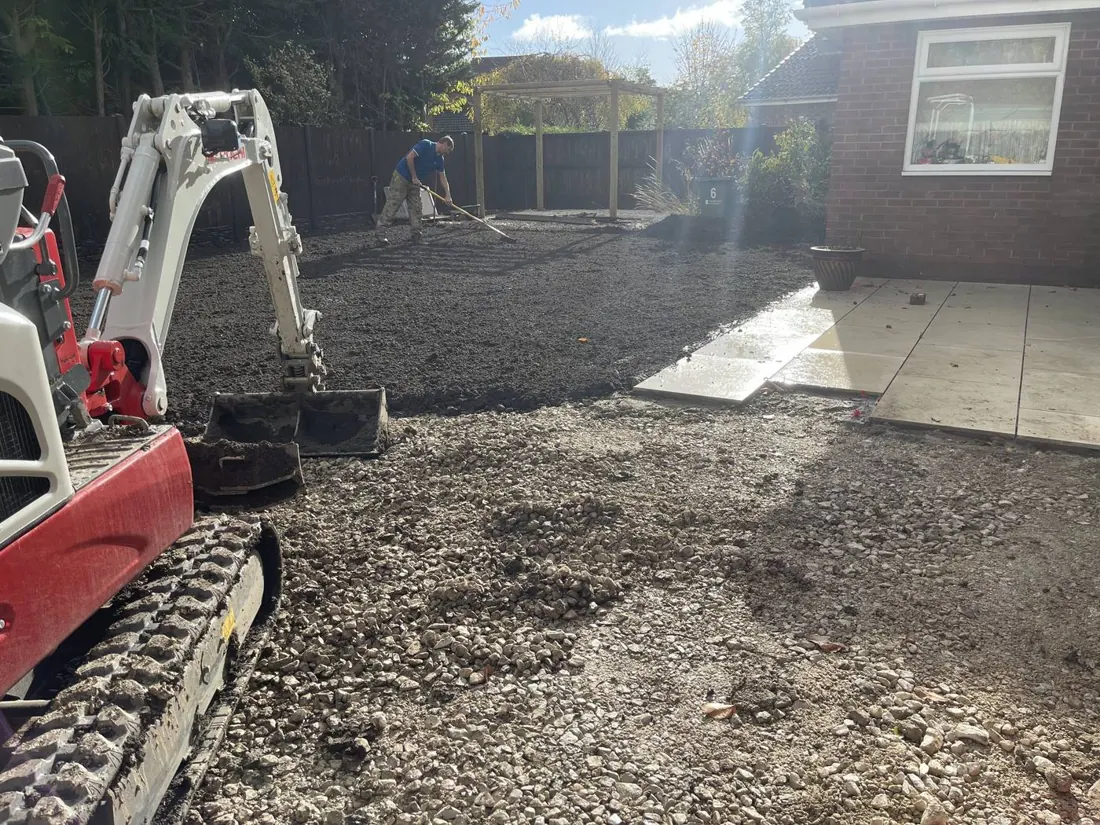
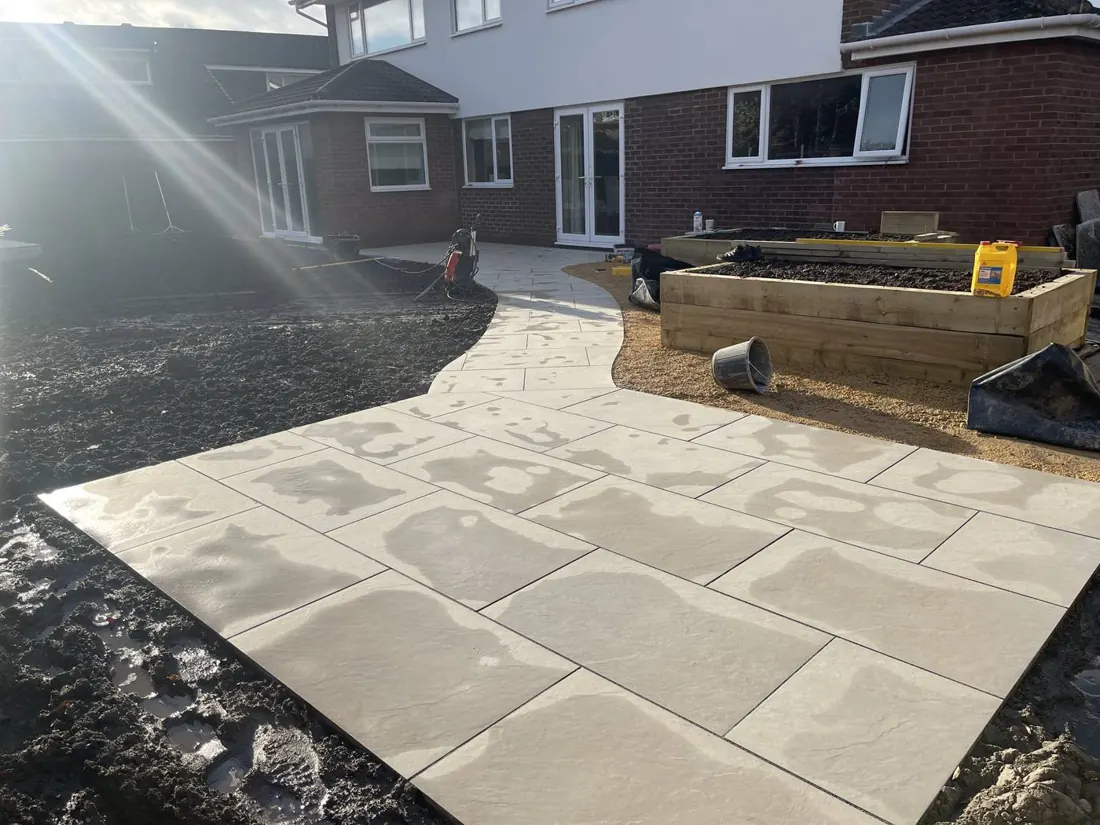
A garden stripped back to bare ground, levels set with a micro excavator, then the new terrace and timber sleeper raised beds built ready for planting.
Landscaping that suits the planting
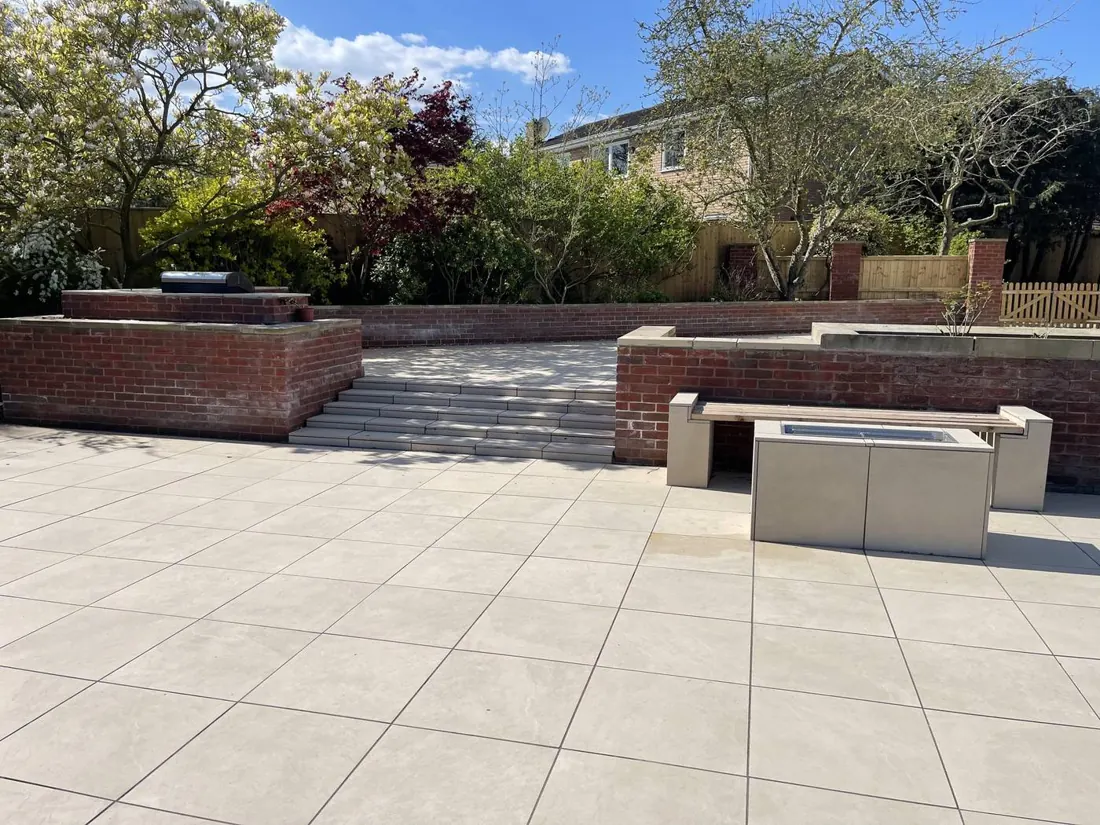
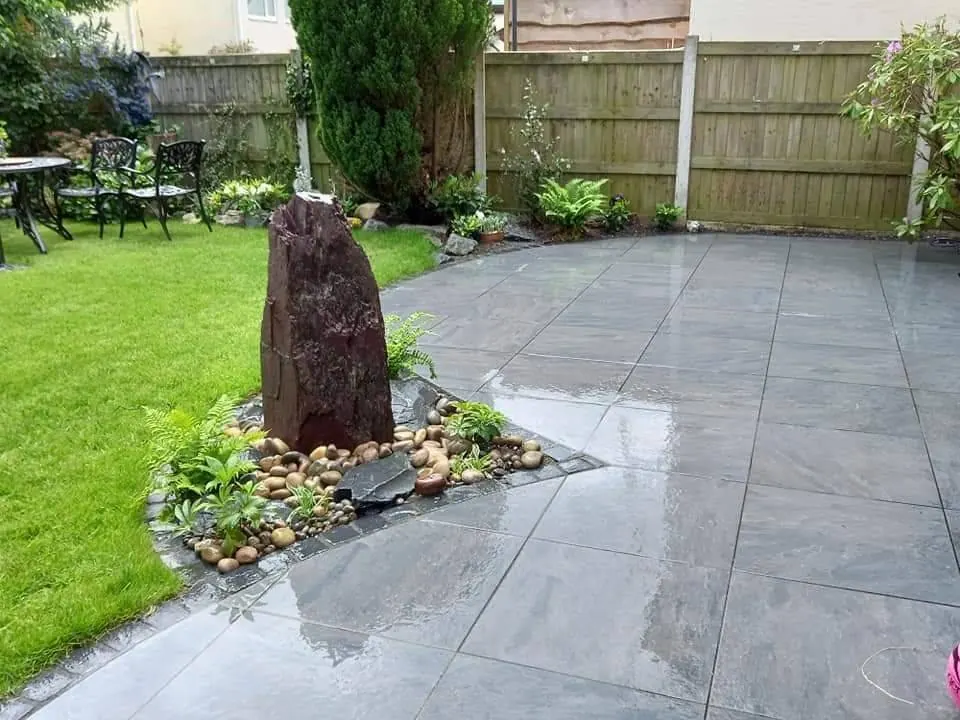
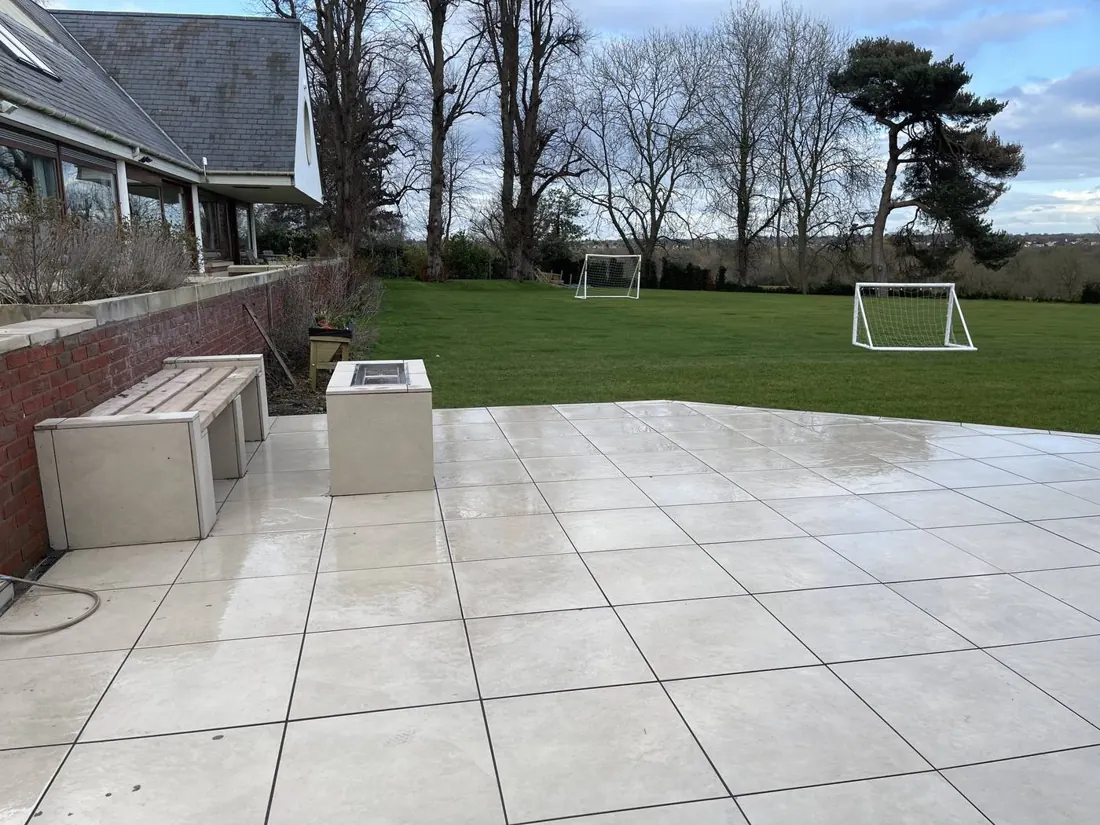
A lot of landscaping is designed as if plants were an afterthought. Because I'm a plantsman first, the hard landscaping is planned around what's going to grow there: pockets left for planting, raised beds at the right height to work at, a lawn shaped so it's easy to mow, and paths that take you past the best of the borders. When the build is finished, I can plant it and look after it as well.
Do you need planning permission?
For most back-garden patios in Wales, no. The Welsh Government's guidance says planning permission isn't usually needed to lay a patio or driveway, with some exceptions worth knowing about:
- In a front garden, a new or replacement hard surface needs to be permeable, or to drain onto a permeable area. Up to 5 square metres of existing surfacing can be repaired or replaced without this.
- Significant embanking or terracing to support a hard surface may need a planning application.
- Listed buildings need planning permission for a new hard surface, and some properties have had their permitted development rights removed by the council.
I'll flag anything that needs checking when I survey the garden, and the council's planning team can confirm it for your property. The Welsh Government's guidance on patios and driveways has the detail.
Spoil and waste
Landscaping makes a lot of waste: soil, old slabs, hardcore and roots. I'm a registered waste carrier, so everything that leaves your garden goes to a licensed site, and it's included in the written quote rather than added on at the end.
What's included
- Site visit, survey and levels
- Layout planned around the planting
- Excavation and spoil taken away
- Compacted sub-base and drainage
- Sandstone and porcelain patios and terraces
- Paths, steps and edging
- Brick and sleeper raised beds, retaining walls and gabions
- New lawns from turf or seed
- Planting to finish, if you'd like it
Questions
How long does a patio take?
It depends on the size, the ground and the access. You'll get a timeline with the written quote, and the work runs through to completion once it starts.
Can you build in winter?
Yes. Digging out and laying the sub-base can go ahead in most winter weather. Mortar isn't laid when there's frost about, so on frosty days the work moves on to other parts of the job.
Porcelain or natural stone?
Porcelain is consistent in colour, very hard-wearing and easy to keep clean, but it needs a primer and careful laying. Natural sandstone has more character and every slab is different. It weathers with age and can green over in shady spots. I'll bring samples to the survey.
Do you take the waste away?
Yes. I'm a registered waste carrier, and spoil and old materials go to licensed sites. It's included in the quote.
Can you do the planting as well?
Yes, and it's the part I enjoy most. The landscaping and the planting can be designed together, and I can look after the garden once it's finished.
Do I need planning permission?
Not usually for a back-garden patio in Wales. Front gardens, listed buildings and big changes in level have extra rules, and I'll point those out at the survey.